6 Oct 2010

Etsy UK sellers collaborate on the ‘UK Silly Sale’

I’ve been selling on the US based sales venue Etsy for some time and UK sellers there have teamed up to run a special one day pre-Christmas sale called the ‘UK Silly Sale‘ – the idea being to ‘clear the decks before decking the halls’.

It is officially scheduled as a single day sale and promotional event on Friday 8th October, but many sellers are extending their discounts for a longer period, as am I. If you visit Etsy and search for ‘UK silly sale’, it will turn up all manner of bargains from the talented artisans (and vintage and supplies sellers too) in the UK who have shops there – everything from hand spun yarns, delicious baked goods, handmade soaps, handbags, hats, bee hotels, paper goods and original art.
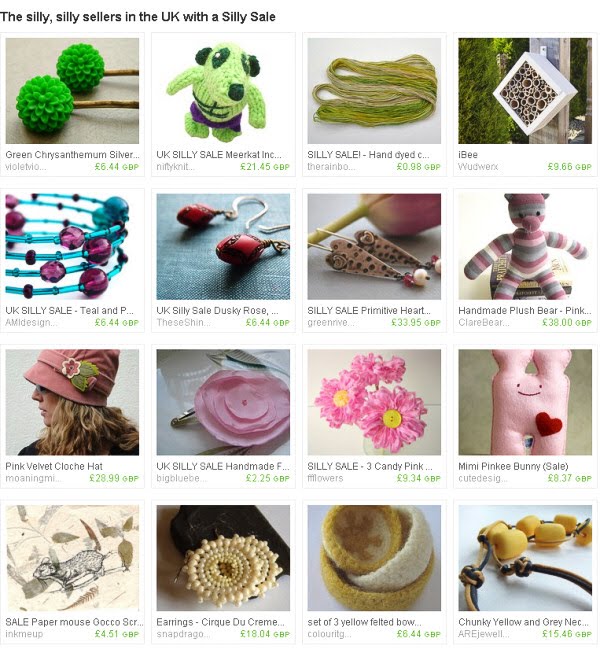
It is very much a team effort, individual sellers set the details of their own personal sale, but we are communally promoting the Silly Sale and helping each other. One of the features is that we each create an Etsy treasury of items in the sale or from sellers participating – a collection of individual items on a theme. I’ve done one already, but there are so many gorgeous things to choose from that I will need to do at least another one.
My own Silly Sale will run for a full week and across my two main on-line selling venues – my own web site and my shop on Etsy. I’m offering 15% discount off everything in both shops for one full week from midnight on Tuesday 5th October – so it’s already running now. Nothing else has been compromised whatsoever, the same high standard of workmanship and service – just lower prices for a few days.

This is a perfect opportunity to get a head start on your Christmas shopping, or just treat yourself to something you’ve had your eye on and save yourself some pennies too – we all need a little extra help in these difficult times.

Christmas gift service:

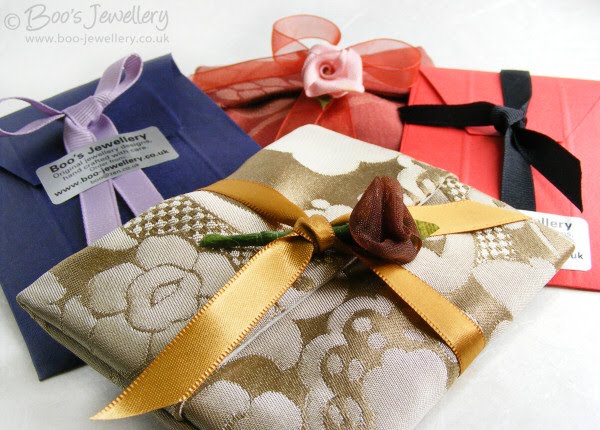
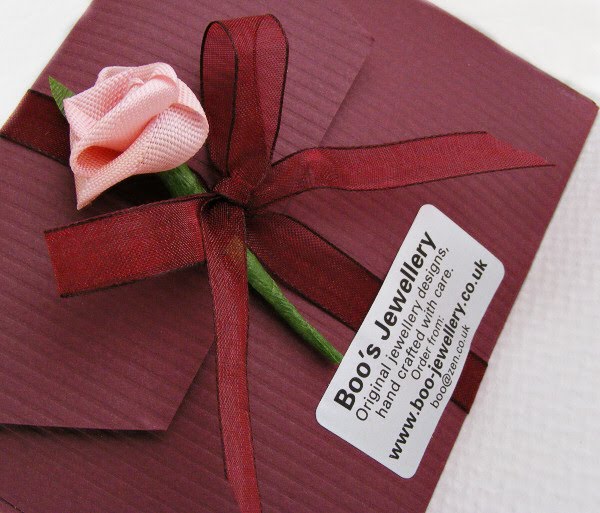
If you would like Christmas gift items (or gifts for any occasion for that matter) sending directly to the recipient, I am always happy to do this for you at no extra charge (although there’s a modest postage supplement if sending overseas, as with all orders) – I will gift wrap items, as shown, as I do anyway on all items, and include a Christmas card with a personal message from you.

If you want to order now to take advantage of the discounted prices, I can schedule the item to be posted to the recipient nearer the festivities on a date to be agreed with you.
If you’re buying items intended to be given as gifts in person, at any time, please let me know when you place the order so that I can ensure that you have gift-wrapping materials included, but the item is left un-sealed to allow you to inspect it when it arrives, ready to re-wrap to give.
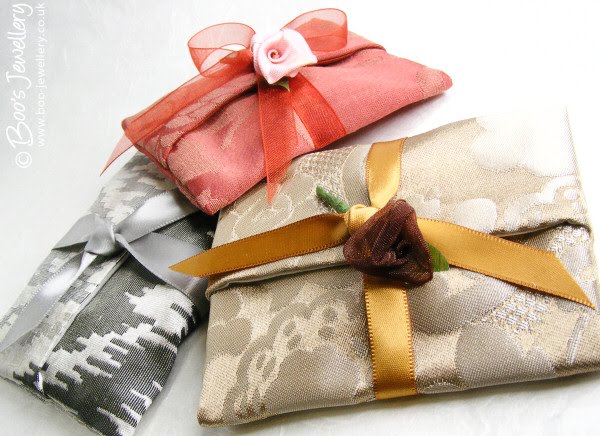
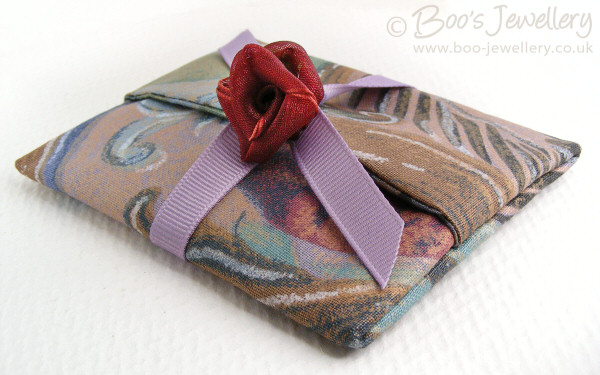
Some of my new fabric keepsake pouches – a little touch of luxury for storing your jewellery pieces or can be used as a travel case.

I have made some fabric keepsake pouches, as shown in the photographs, which are ideal for gift giving as they can be re-used for storing the jewellery piece, or as a travelling jewellery case – I use one myself for just that. For the duration of the Silly Sale, one hand made fabric keepsake pouch will be included with all orders.

4 Oct 2010

It was a fungi sort of a day

As I posted about in my previous photograph-based blog, I love to walk in woodland and feel that trees are vitally important to my emotional and physical well-being.

We spend a lot of time in the English Lake District and have just spent some assorted days there over 2 weekends. This particular walk, Revelin Moss at Whinlatter, north west of Keswick, is another favourite and a more gentle walk than some we do and is consequently one we often do when we’ve either done something else earlier in the day, so have limited time, as was the case this last Saturday, or by its location, we often do late in the day, also the case this last weekend – so light levels were an issue for the photographs.

Please click on the photographs to see a larger copy, they’re rather dark here on the page.

The previous woodland blogged was well established and largely deciduous and in places mixed, where this one is more plantation style coniferous woodland and is owned and managed by the Forestry Commission. I have always felt that it has a slightly Alpine feel to it, it’s a little higher than other walks and the smells and atmosphere often transport me across Europe. It’s a looped walk designed for disabled access and pushchairs, so the paths are wide and well-maintained, so easy walking, albeit quite undulating. It also has a newly installed mountain bike route which crosses the path in places.

When you stop to look closely at the steep banks of moss and heather adjacent to the path in places where it carves through the hillside, you can see a massive variety of species growing shoulder to shoulder.

The last week has been both much cooler and some days have been incredibly wet – autumn arrived in no uncertain terms. Walks often have a theme to them – particular things are in season, or the weather highlights particular features. On Saturday the stand-out theme was fungi. The damp weather and changing season had caused all manner of woodland fungi to fruit and there were some fabulous specimens.

I had to take this from some distance and through foliage, and with a long focal length, as they were the other side of a stream from me and growing from the top of a dead tree stump.

I love to see them growing and think they’re fascinating things of great and diverse beauty, but I can’t claim to know much about them – I just like to see them, take photos and largely keep my distance. I would never know what might make good eating – it seems to me that the difference between and good meal and certain death (or at least an extremely unpleasant experience) is often a very subtle one, requiring serious expertise.

This was the largest patch of fly agarics I think I’ve ever seen, just nestled at the roots of some well established conifers. But the larger specimens of the group, off to the left and the size of dinner plates, were all kicked over and broken.

These large brown specimens seem to start very small and button shape, growing and opening until they curl upwards with undulated edges.

One thing that always saddens though is that I see so many kicked over and damaged. I’ve never known if this is people who are concerned by them for some reason, or just for sport, dogs routing around near them, or even wild animals like deer or badgers kicking at them to see if they’re edible. But it seems a common sight when walking in woodland, that whilst there are many lovely specimens – and some walks are especially good for the variety of species seen growing – there are always many that are broken up and damaged – and clearly not in a manner that suggests natural wear and tear or weather damage.

The dramatic looking red and white spotted fly agaric mushrooms shown earlier and above are perhaps one of the most recognised species and that is as many as I’ve ever seen on one day. Further along the walk I spotted three very new mushrooms just emerging from the ground at the base of a tree. One was barely breaking the ground and the other two were still tightly closed and only just above ground.

I had always thought that their redness was an indicator of their toxicity, but apparently they’re unpleasant, rather than deadly – you’d need to consume quite a lot of whole fresh mushrooms to actually be in real danger. But they are thought to have hallucinogenic properties when the flesh is properly prepared (and some of the techniques to do so are quite unsavoury) and the ‘fly’ of the name is less to do with insects and more to do with the likely resulting hallucination involving yourself flying.

There is even some speculation that their red and white livery is responsible for the traditional red and white attire of our modern Father Christmas / Santa Claus – thought to have arisen from the combination of many factors over time, from the fondness of reindeer to eat fly agarics (I wonder if they hallucinate about flying?), old stories of Siberian shamen spirits who visited yurts down the smoke hole bearing little leather bags of dried agaric pieces to tempt those below and their traditional appearance in fairy tales and folklore as a token visual and easily recognised mushroom – and often used as a decorative element around the festive period.

I think I prefer to see them nestled at the foot of a tree, just doing what nature intended.

29 Sep 2010

I can’t imagine life without trees

For me, for the most part, as long as I can periodically escape to some of my favourite spots outdoors and get some fresh air and stretch my legs, I can cope with whatever life throws at me. In tricky times, or with tedious things I have to endure, like dental work or waiting in unsavoury places for overdue buses, I imagine walking through some of my favourite tracts of woodland. It’s something I look forward to intensely when I know I have a trip planned. The mental images and memories of being in places such as the ones shown here, pop into my mind many times a day and I long to be there.

Please click on any of the photographs for a better view, they look rather dark here on the page.

Even on the treadmill at the gym, I position myself on one of the machines near a window where I can see a short run of screening pine trees they’ve planted to separate the tennis courts from the playing fields and picture myself walking through them into more dense deciduous woodland beyond. I just cannot conceive of life without trees and being amongst them. I’m totally comfortable in their company and more at peace than anywhere else.

Early in the walk, a well made path runs level along the lake shore, rising steeply away from it shortly.

If I were given the option to wish myself away to anywhere, it would almost certainly be to one of my favourite woodland walks. Ideally, on a crisp, still, autumnal day with clear blue skies, fabulous views and glorious autumnal colours – even better if the woodland is deciduous or mixed and has a good smattering of beech trees. This particular day it was grey and damp, so the colours are not at their best, but I’d rather be there in rain than most other places on a nice day.

There is a habit in more recent times in managed woodland, to leave some of the trees that have either fallen naturally, or been cleared for management, to rot naturally in the woodland as they would without intervention. This then becomes a habitat to a wide range of plants and insects, adding to the health and biodiversity of the woodland.

I just love the intense array of natural sculpture nature provides us with along the way, partly from human intervention as above, to the natural abstract of the materials of the forest, as below.

The weather doesn’t often play the game, but the venue is much more reliable. I don’t even mind less than perfect weather, sometimes it even has its advantages, well known spots tend to be much quieter, which is always a bonus.

I don’t mind walking in dampness – loving the English Lake District makes this somewhat a necessity – gentle rain certainly won’t stop us from setting off – but driving rain and wind do tend to just spoil things. To quote Billy Connolly, as I have many times; “there’s no such thing as bad weather, just the wrong clothing.” If you attire yourself accordingly, it doesn’t have to stop you enjoying the outdoors.

One of the few advantages of being that bit more mature, is that you can plan your holidays outside of school holidays when it’s generally much more quiet and often the only people you pass are other mature types taking un-seasonable breaks and local dog-walkers.

Being a lover of and regular visitor to the Lake District, weather does tend to be a factor close to your heart, but we’ve had atrocious weather in summer and lovely weather in spring and autumn, even winter, so the time of year actually seems to matter little – you get what you get.

We’ve just returned from a 4 day break there, it was supposed to have been the start of our 2 week annual holiday, but a whole batch of assorted circumstances meant we had to downgrade it to a short break instead this time. And after a recent health scare and resulting hospital treatment, I was a little below par and my walking a tad less robust, but it actually made my time amongst the trees even more precious, valued and needed. It did me a world of good – woodland rarely fails to restore me.

There are a couple of sweet chestnut trees along this particular path and at this time of year they’re just falling off and opening on the ground. They’re fabulous to look at, nestled amongst fallen leaves, but decidedly hostile for handling. Last year I made the mistake of putting some in a bag to use as photo props, but having strapped it to my camera bag was like a pin cushion when I got back to the car – those interlocking randomly angled spines are incredibly effective defensive weapons.

The photographs on this page were all taken on one walk on Monday along the western shore of Windermere – the largest lake in the English Lake District. The eastern shore is the main holiday area and the best know to most people, but we love the other side – it’s densely wooded and much quieter. This particular estate is owned and managed by the National Trust.

This particular favourite walk, of just under 3 miles, starts flat along the side of the lake and rises and undulates through mixed and established woodland slightly off the lake, dropping back to the lake after about a mile and a third or so – it’s rather more steep in places than the photographs would have you believe.

We have a habit of getting to the point where the path meets a small beach with lots of large rocks, where we perch awhile, watch the boats, feeds some ducks, take some refreshments and then return, whence we came, for lunch back at the car park.

I just love being amongst this sort of mixed and elderly woodland and it’s especially gorgeous in autumn where the mix of beech and oak amongst a whole selection of different spruce and pines makes it an interesting and varied scene.

15 Sep 2010

I’d really rather just be making pretty things

As I was uploading some newly prepared photographs to my web site earlier, I noticed that the image file list had passed 2500 files. That’s just the photograph directory for my listed products for sale, which currently counts at just over 422 items.

Granted, not all of those are items actually still for sale, a significant proportion of those (probably about 30%) are now sold and remain on the site in the ‘sold’ category to serve as a gallery of past work and potentially items that can be re-made to order if required. But it set me to thinking about the body of work – and investment of time – this represents.

Please click on any of the photographs to see a larger view.

When I photograph an item to sell, I need 5 photographs to list on Etsy and so aim to produce more finished images than this, so that I can choose the best, in terms of image and photographic quality (sharpness, exposure, depth of field, colour etc.), angles and an all round impression of the product available. My own site will allow me to add as many photographs as I want, so I set off with the aim of taking something like 20 photographs of an item and post processing and finishing around 8 or so of them and then choosing the best of those to use.

I like to show pieces on a variety of background colours, as well as different angles. After all, buyers will potentially wear them against a varied range of skin tones and hair colouring and adjacent to an infinitely variable selection of fabrics.

It is my habit to produce at least 2 finished versions of each selected image – one each for Etsy and my own shop (required at different sizes) and usually one image per piece of jewellery that becomes a photo business card – where I like the views enough and they’re the right proportions for the artwork. I sometimes produce additional variants to use elsewhere or for print publications too.

Photographs of suitable proportions, that look like they’ll print nicely, are made into artwork for my photo business cards, which I print and laminate myself so that I can keep adding current designs to those in use.

I often take many ‘similars’ – views from the same angle, for example, but with focus placed in a different spot within the image to create different visual effects or highlight particular details of the design. I often bracket the exposure to see which looks best once on the computer – especially important with reflective silver pieces – as is a lot of trial and error in creating decent and controlled reflections.

Polished silver is especially problematic, if it reflects the light too much, it burns out to white, devoid of detail and if you get something reflected, it might not be something you’d want the world to see, so trial and error in creating appropriate reflections is sometimes the only way. Various pieces of black paper were held adjacent with this image to put detail and form into the polished surfaces.

So I tend to end up with a whole collection of images of a given piece, which I know in advance will be seriously whittled down to the quantity I hope to finally publish.

Sometimes I like to deliberately use a shallow depth of field, with a low perspective to give emphasis to a particular feature or just add drama.

So I was curious to calculate how much work this represents. If I allowed 15 minutes per finished published image as a rough guestimate, this gave rise to a total of 625 hours of work for my 2500 published images – which is nearly 16 full time 40 hour working weeks. So if I were to settle down now and start on the task, I’d maybe be finished in time to celebrate New Years Eve. This also serves to illustrate the vital need for a habitual and reliable data back up strategy – a few minutes a day could save you a whole world of hurt in the future – but it’s an oversight that you only tend to make the once – often a very hard lesson learned.

Add to this the further time necessary to measure each piece and keep a record of this information and then write this into a meaningful search engine friendly description with marketing value and then the further time to actually bring it all together on a web page (and possibly several, that may require different formats), with links to associated products and ensure that is is spelled correctly and error free, you can see just how much of an investment it time it all represents.

And of course, all of this time has to be accounted for in terms of both your working weekly schedule (as does accounting, cleaning, stock control, tool maintenance, materials purchasing etc. etc.) and how you price finished pieces. It might take you an hour to make something, but if it takes another hour to photograph it, edit the images, write the description, research details on the materials used, measure it and present it on your sales venue of choice, that time also needs to be taken into consideration. If it’s a design that you can repeat often and make plenty of, obviously that investment may be spread over several sales, but for one-off pieces, it can potentially be as much time as you spent on making it, so all of this needs to be considered within your pricing structure.

I’ve said many times that the quality of work (irrespective of the craft items themselves, this is in addition to that work) shown by artisan sellers undertaking this task is of a very high standard indeed. We each need to be accomplished photographers, copy writers, marketing and promotional gurus and also be fully informed on matters such as postal and shipping methods and often our own tax accountants too.

We also need to be accomplished at gift presentation once sold. I address environmental concerns by making most of my own packaging materials, often up-cycling materials I already have to hand. In this case, I’ve sewn these fabric keepsake pouches from what were quality home furnishing fabric samples from when I had a sewing shop. I make the ribbon rosebuds too – my tutorial for them is in the blog.

Many high street retailers with web sites can’t even come close to the detail and quality of presentation many individual and independent artisan and craft sellers manage – often on top of full time employment- where such retailers will employ a whole army of suitably qualified and dedicated personnel to do the myriad of tasks we all need to master individually.

So kudos to the accomplished and talented members of hand made community, that could teach high profile retailers a thing or two!