23 Jul 2010

I wish they’d just organise themselves

As I’ve blogged on previous occasions, I have a small garden. I love it, it’s very special to me, but it’s the size of a postage stamp and everything is grown in pots within a walled courtyard area.
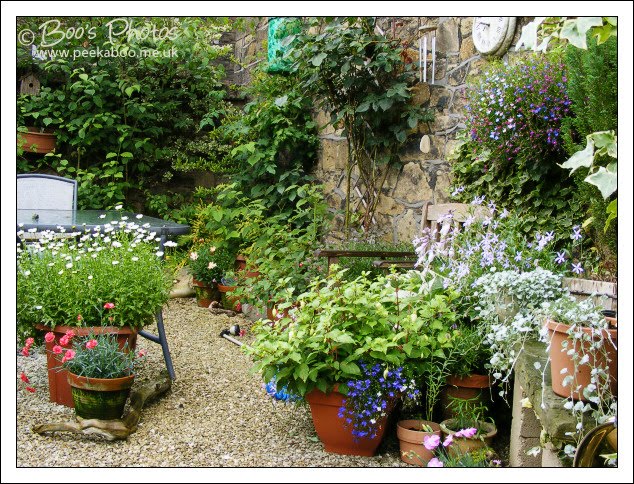
Please click the photographs for a larger view.

As it’s tiny, the more it grows, the less space we have for us. I love eating out there, but the weather hasn’t been suitable for what seems like a lifetime now.

One of my very favourit-ist things to eat is raspberries. Especially naughty and decadent when teamed with something dark and chocolatey.

So for several years, since my husband gave me some sorry looking sticks in a bag of mud one Christmas, I’ve grown a few of my own. When the sunshine is kind, we get quite a yield from 3 large pots of canes.

But there’s the rub, the crop is spread over several weeks, getting a mere handful a day – and if you’re too slow picking them, something else visiting the garden beats you to it. My money is on the blackbird – I already know he loves fruit, as he stands on the bird table yelling at the kitchen window for sultanas if there are none out. So he’s still the prime suspect until I get any evidence to the contrary.

This would be a pretty typical daily haul. less than 10 ripe raspberries and 3 alpine strawberries!

A.K.A. ‘Waterer’s perks':

A considerable number of years ago now, my mother put a little packet of alpine strawberry seeds in my Christmas stocking. You can still buy the same ones, they look like a little book of matches, with pointed sticks of cardboard stuck with a cluster of seeds that you just poke into your compost, to sow. Couldn’t be easier.

I planted them the following spring and have had a garden full of self-seeded alpine strawberries ever since. If a fruit falls off the plant, it seemingly germinates with great efficiency and you find clusters of plants growing in other pots and between them. I now have quite a collection and I just leave them to it, allowing them to fill gaps in the garden. It’s a bonus when you see a bright red spot showing amongst the leaves.
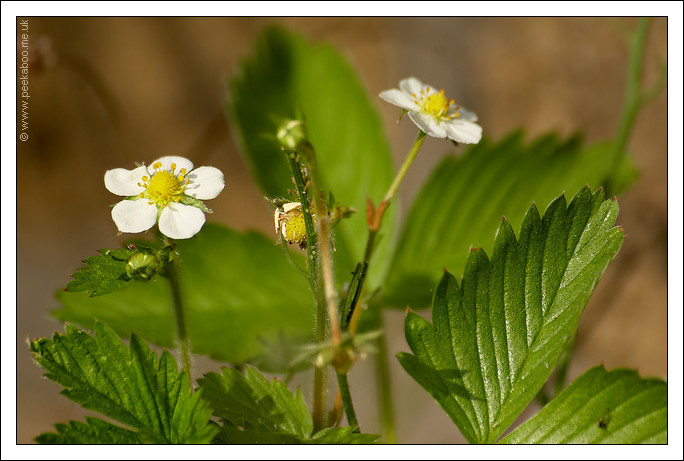
Tiny, delicate Alpine strawberry flowers, some of which are already developing into fruit – photo above taken another year, the one below, in rain, today.
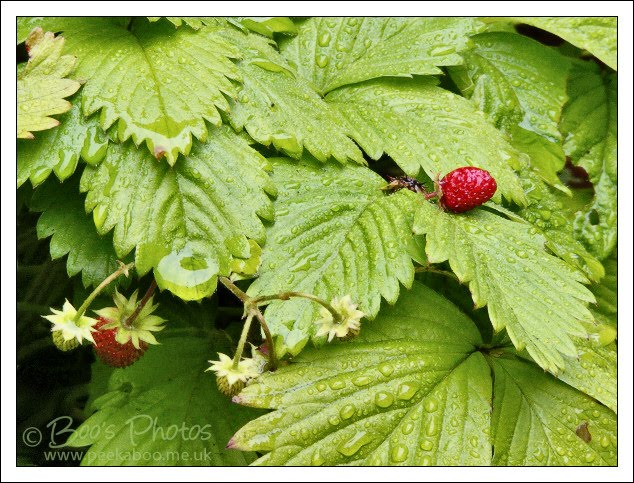
As the fruits are tiny – but super-concentrated flavour – and not that plentiful, they’ve always been known in the Boo household as waterer’s perks – whoever waters the garden of an evening, gets to consume any ripe strawberries they find.

So it has been with raspberries to some extent. But now I have more canes, the yield has increased a little, but it’s still not very efficient – as crops go. At this time of year, we tend to pick a handful each day – not enough for dessert each day for 2 people, as you can see, but I also lack the self-discipline to just pop them in the freezer and allow them to accumulate. My mother however does this and each Boxing Day we have a raspberry flan, as a delicious demonstration of her own self-control.
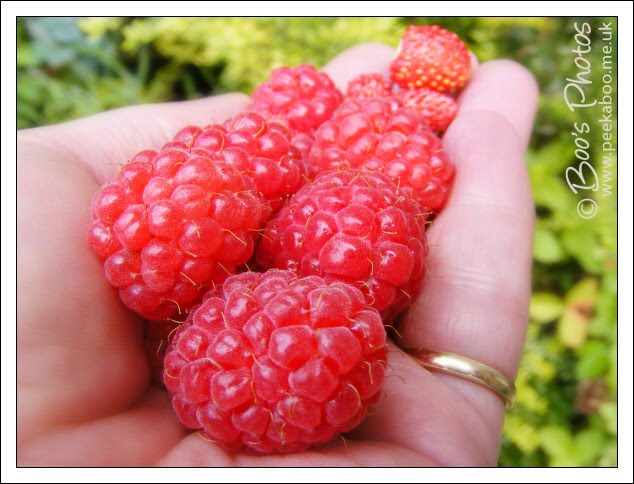
There may not be very many, but they’re pretty fabulous specimens.

So I just have to force myself to put them with chocolate ice cream and deal with the issue in that manner. But if they could get organised and crop all at the same time, I might not mind sharing with the blackbird quite so much and it would actually be worth buying some extra thick single cream for them.

14 Jul 2010

Keep up the good work!

At the weekend whilst working in the garden I spotted several ladybirds – and moved each of them onto a rose I have that is totally infested with green fly. I regularly clean them off only to see as many again the following day. They just love the emerging new shoots – on a rose that has been rather slow to get going this year after I both moved it and re-potted it this spring.

All of the ladybirds remained on the plant for the next few days, despite horrible cool and wet autumnal-like weather with a very stiff breeze; they diligently worked away, chomping their way through my greenfly – I say my like I’d choose to actually own the greedy, promiscuous blighters.

I just went out to the bin and went over to monitor their progress – and was astonished to see that the rose was almost cleaned of greenfly – a handful of odd specimens remain – but the plant is as clean as it’s been all summer. I could actually see 2 of the ladybirds still munching away. I suspect the others might have fallen off, stuffed to bursting and moaning that they couldn’t possibly eat another single thing, not even a wafer thin mint! I imagine they’re lying in the leaf litter beneath the rose, clutching their stomachs.

I grabbed my ‘jewellery’ camera which was close by, as one of the ladybirds devoured a greenfly, seemingly almost half it’s own size, in a matter of seconds.

Please click the photos for a larger, clearer view.

It’s not very sharp as it’s a very dark day and the stiff breeze was moving the leaf and the poor ladybird significantly and locking focus was somewhat tricky from an inch away. You can just see the last trailing edge of a disappearing greenfly.

Aren’t his iridescent wings just gorgeous.

I love hover flies – we seem to get quite a lot of different species in the garden and they fascinate me to watch them – with their little flat ended tongues probing leaves for sap and their undercarriage that they drop and raise as they come to rest and take off – they never bother you or come into the house, just go quietly about their business. This little chap – and he was a little one – was working away on the sticky sap left behind by the greenfly – so they made a good team.

I wonder how much they charge and if they have any mates who want work?

10 Jul 2010

A rare event – a holiday with actual sunshine!

Whilst I work on the ribbon rosebud tutorial to post shortly, I thought I’d post some of the photographs taken on our recent trip to the English Lake District, as I’d been enjoying looking through them and reminiscing this afternoon. Sometimes photographs in themselves are not of portfolio quality, but it is the story behind them that is the interest. All of these photographs were taken with a compact camera, as we were concentrating on some quality walking this holiday – as somewhat rarely we actually had the weather for it too – so I didn’t routinely carry my DSLR. The photographs have been post-processed to taste.

The Lake District is a place we love very much and despite spending every possible moment there, have never tired of. We’ve often said that we’d like to win the lottery and escape there to be walking and photography bums – we often speculate just how much of it we could stand before we’d get bored of it. I suspect it might be quite a long time and I’d really love the opportunity to thoroughly test that. We’d take such a task very seriously and give it our full efforts.

So Mr Boo bought a lottery ticket tonight with a view to funding our ideal lifestyle and we did indeed have a rare win. Unfortunately it will only be enough to buy afternoon tea or a couple of ice creams, not come even close to buying any of the very, very expensive houses we’ve already shortlisted.

One of the places we love, just on the extremity of the Lakes and looking towards them and not far from where we stay, is the coastal town of Arnside. It has the air of a place that time has left thankfully largely unspoiled. It has a very tranquil and unhurried feel and we love to visit there, especially when it’s bracing and you can walk along the beach or adjacent pathways and let the sea air blow away the cobwebs. We often try to time our visits with a suitable meal time to avail ourselves of the wares of the local chippy or when the tide is coming in. Arnside has a flood tide, or bore. As bores go, it’s a modest one – but still very worth seeing. There always seem to be good sunsets here too.

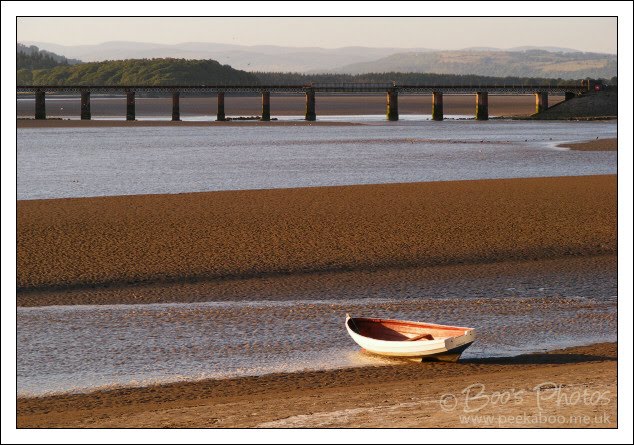
This photograph was taken during an evening flood tide and you can see the water progressing just past this boat – within 2 or 3 minutes it was totally floating.

Please click on the photographs for a larger view.

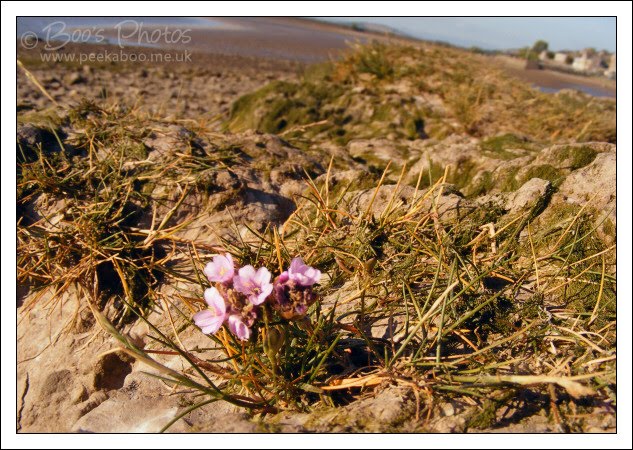
A classical example of a photograph that fell somewhat short of expectations. I was trying to catch this delicate seaside Thrift at the front of the frame, in focus, at eye level with the scenery in the background. But short of lying on the rocks, I had to improvise with the self-timer and this was the best I managed – the rock I selected clearly wasn’t as level as I’d thought!

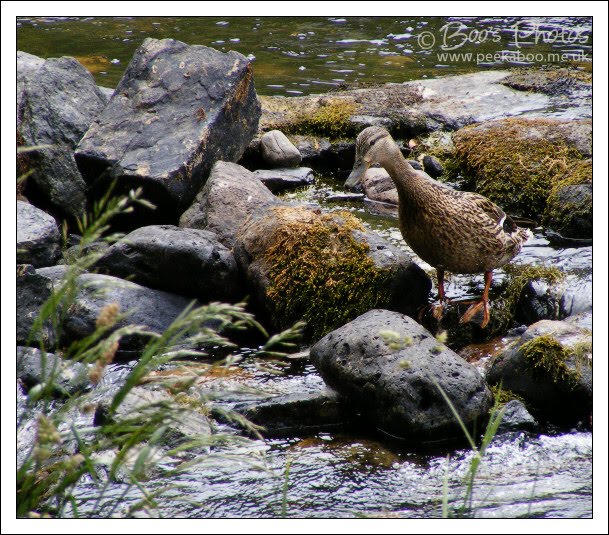
This was an odd and rather poignant scene. We’d stopped at a bench for a snack during a walk around Grasmere and I could see a crow in the edge of the water nearby eating something – he was having a substantial feed. I watched for a while through binoculars, trying to fathom out what he was eating, expecting it to be some of a walker’s discarded packed lunch. It became evident that it was the carcass of a mallard duck. As I watched, a mother duck with 3 medium sized and still downy youngsters approached and she spotted the body in the water.

She was clearly distressed by it. She’d continue on her way, then return for another look. Maybe she thought it was one of her offspring – as ducks have large broods and with only 3 remaining, she’d clearly already lost some. It was an adult duck, but it obviously troubled her, which was rather poignant – ducks clearly have feelings too.

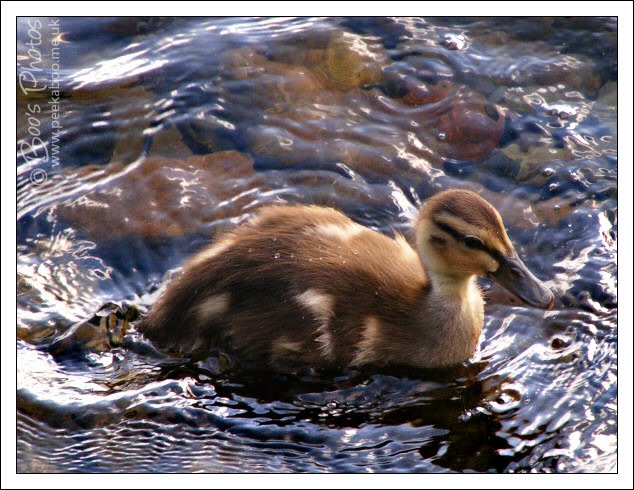
A holiday is simply not complete until you’ve both eaten ice cream and fed ducks (and even after 30 years of training, Mr Boo still doesn’t fully grasp the concept of keeping bread past its best for just such purposes) – and this particular holiday we saw a lot of ducklings, so feeding them is compulsory. It’s the law! Fact.

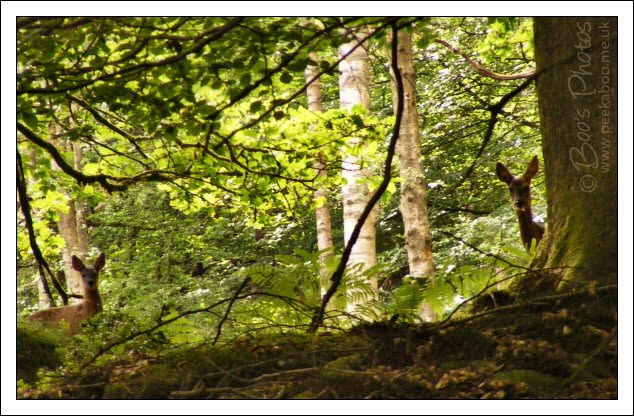
Talking of wildlife – this is something that especially interests me, both as a photographic subject and just to enjoy for my own amusement. We have various spots where we regularly see deer or other favourites. I didn’t do that well on this trip, but at the very spot where we’ve seen deer before, we just spotted two youngsters amongst the trees.

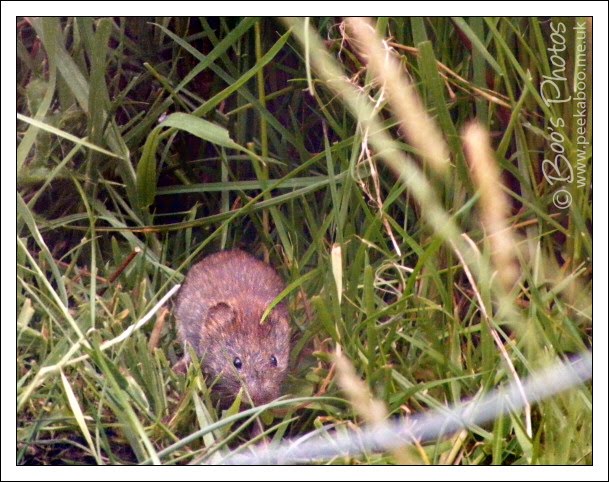
At the place we stay we have a bird table outside the window and often see mice on the ground beneath, gathering morsels that fall and taking them off to their larder. We watched this particular chap making several runs to the table from a nearby reed patch – always running the same route and pausing at the edge of the reeds to check the coast was clear before dashing over to the table.

I only managed this one snatched photograph with my compact camera, as he moved so very fast and seemed to prefer running his food sorties each morning when I was in the shower – never appearing even once when I had the right gear set up for the task. I didn’t think it had the ears of a mouse, so on consultation with wildlife books it looks like it was a short tailed vole or field vole. Mr Boo established the lack of a long tail on a later visit – I believe that a long tail would have made it a bank vole.

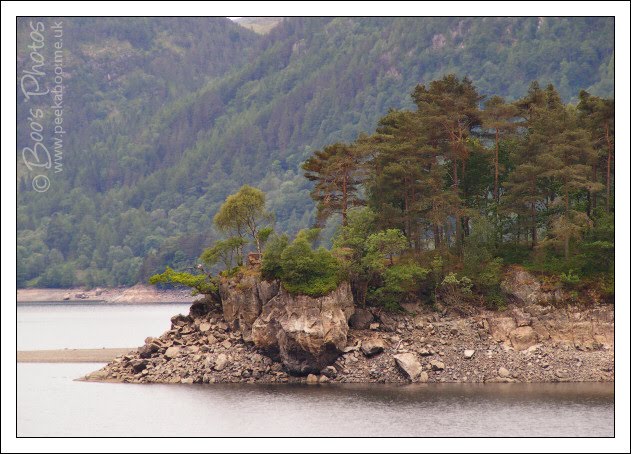
We are currently undergoing a hose-pipe ban in the north west of England after the driest start to a year since records began – reservoirs close to us at home are the emptiest I’ve seen them for many years and this is also true of Thirlmere in the Lakes. I can’t actually recall seeing the level so low before – it must be 20 or 30 feet below its usual level.

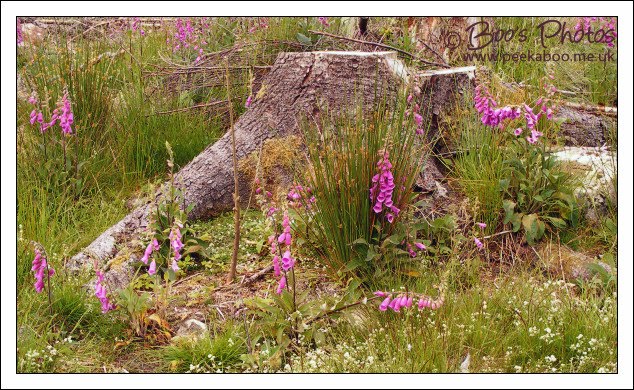
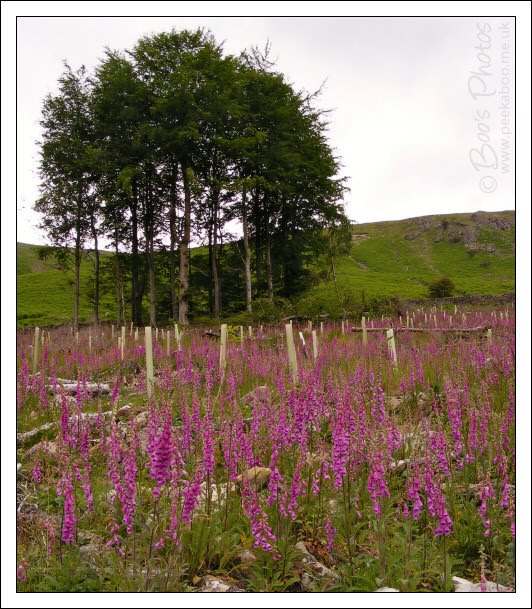
Areas around lakes and reservoirs are often also used to grow timber crops and you’ll often come across areas once filled with dense woodland laid bare after felling. At first this looks quite alarming, to see it barren and devoid of woodland, but nature soon rectifies that and abundant life bursts forth in short order. You need to view it from close quarters to fully appreciate the diversity of life it quickly supports. The newly planted trees grow rapidly and it only looks bare for a handful of years.

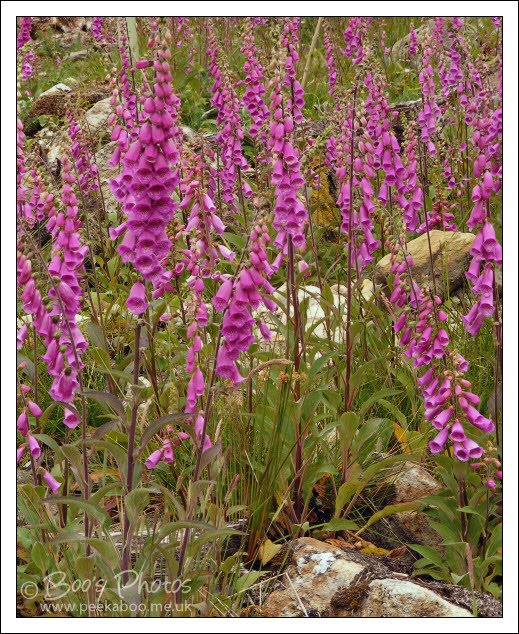
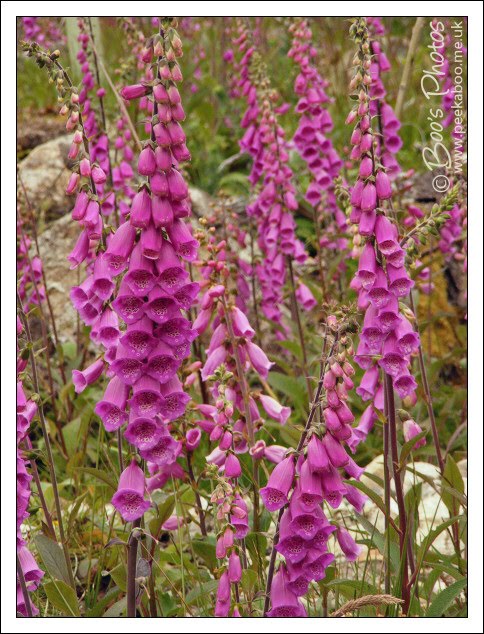
In recent times, the managing of such landscapes seems to have changed, where in the past all of the dead timber would be cleared totally, they now leave smaller branches, fallen trees and scrub behind as an ecosystem in its own right. One of the nature walks we took, was part through cleared woodland and part through dense forest and it was fascinating to see the diversity of plants and insects thriving together on the cleared sections. One feature of cleared forestation is the way foxgloves (digitalis) colonise it and this year in particular, they were especially vibrant and abundant.


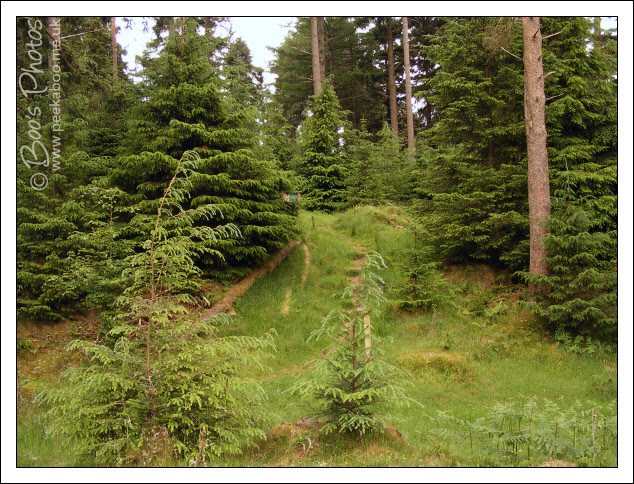
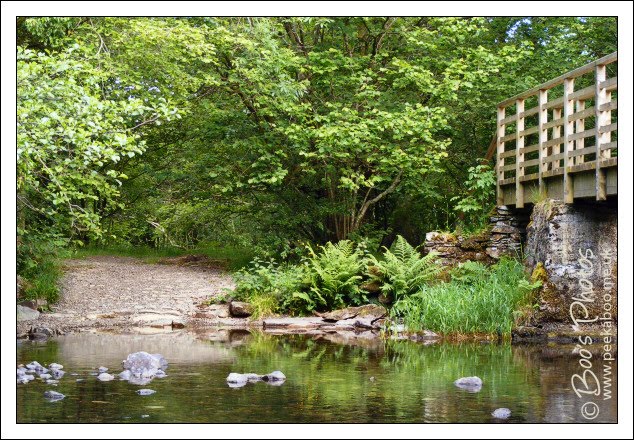
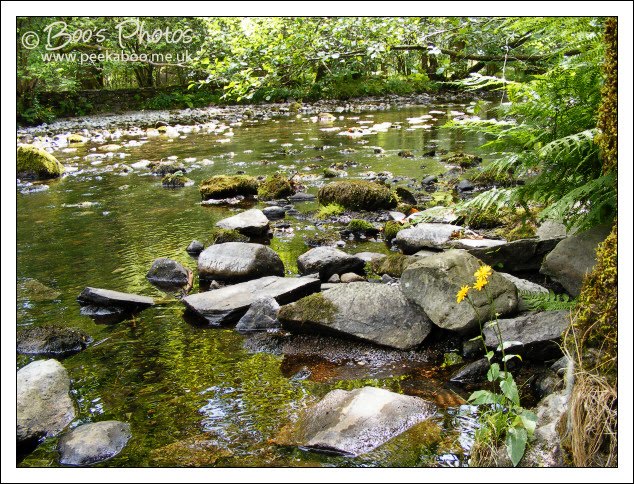
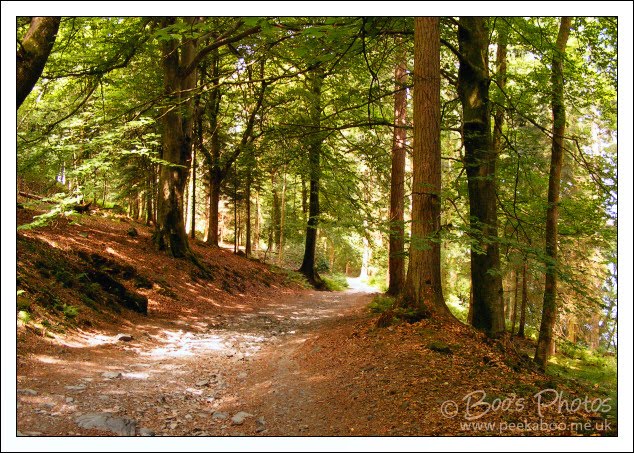
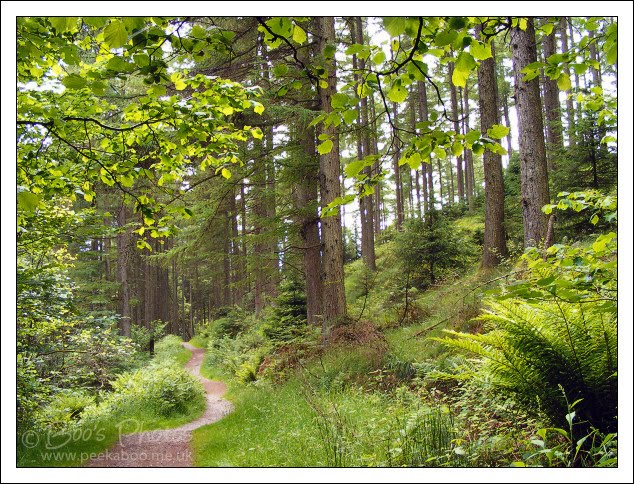
I’ll finish with some photographs of some of our favourite walks. Trees are very important to me and I feel most comfortable amongst them and love walks that take me through woodland – I especially love to see dappled sunlight through trees and thankfully, this holiday, we saw that more often than we usually experience it. I just cannot conceive of living anywhere without being surrounded by trees – and preferably some lakes or rivers too. The last couple of photographs are plant close ups – I’m always fascinated by the amazing geometry that occurs in nature.


5 Jul 2010

50 years to bloom – and my 60th blog!

“The optimist sees the rose and not its thorns; the pessimist stares at the thorns, oblivious to the rose” Kahlil Gibran.

I’m sure that I’m not alone in my current concerns at how much material and how many of the planet’s resources we waste. The materialistic consumer lifestyles we currently lead has given rise to an obscene amount of wastage and use of materials on a very temporary basis, in packaging and disposable items.

Please click on any of the photographs for a larger view.

It’s a joy to re-purpose something I’ve kept hold of for a long time and see it come to life.

Our household operates an enthusiastic policy of recycling and re-using wherever possible and I’m loathed to throw anything away that I think might have some future use. Which is a worthy approach to have, although it does tend to give rise to a house full of junk.

I’m also conscious that as a maker, I too am potentially adding to this mountain of consumer wastage. So I do try and use recycled, or re-purposed materials where practical. I re-use all packing materials that I receive and new items I buy are made from recycled materials. I supplement this by making many of my own marketing materials – hopefully cutting down a little on energy costs during manufacturing and resulting transportation of goods. I try to buy from sources that I know manufacture in the UK, especially locally.

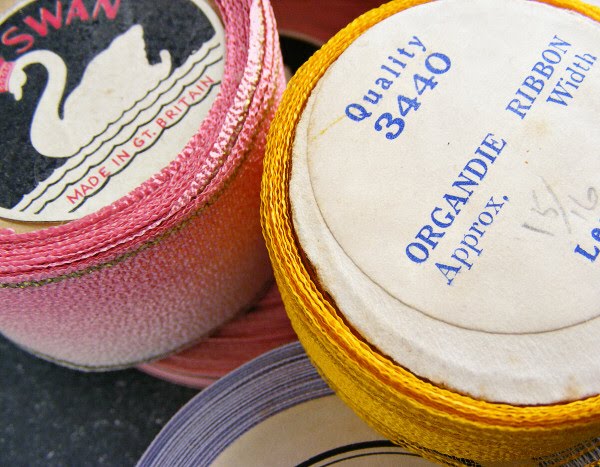
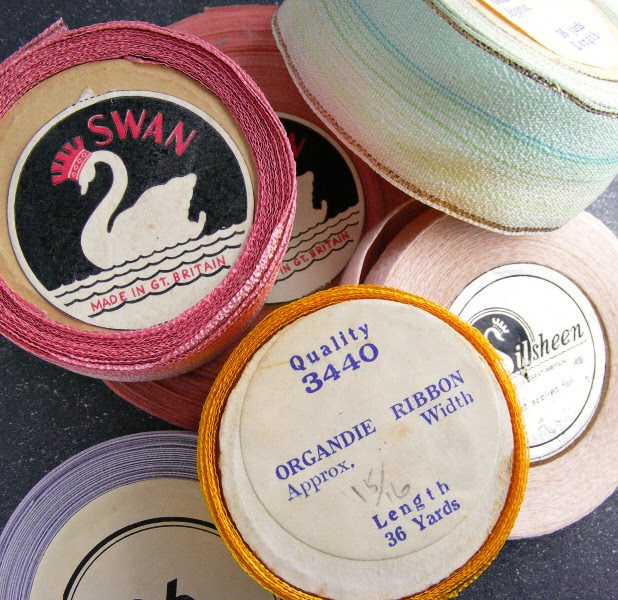
Vintage ribbons – things of beauty, just as they are.

Every scrap of ribbon is saved to wrap jewellery parcels and I make gift envelopes from ends of rolls of nice papers, bought directly from the paper mill that makes them. I like to find old materials and make them into something new. I have old copper from my grandfather’s toolbox that has made its way into many pieces of new jewellery and still use many of his tools.

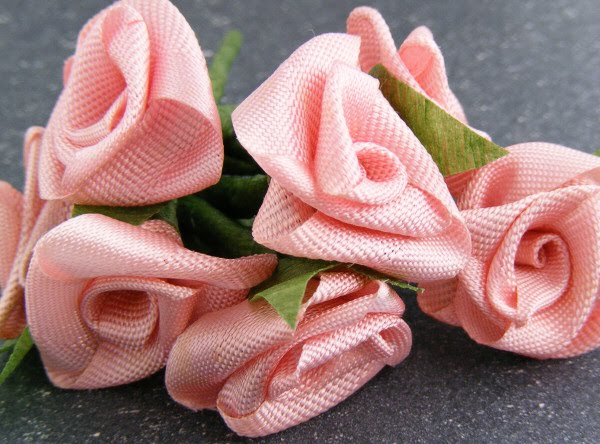
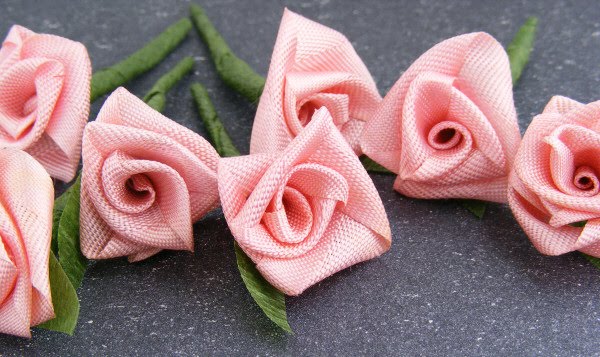
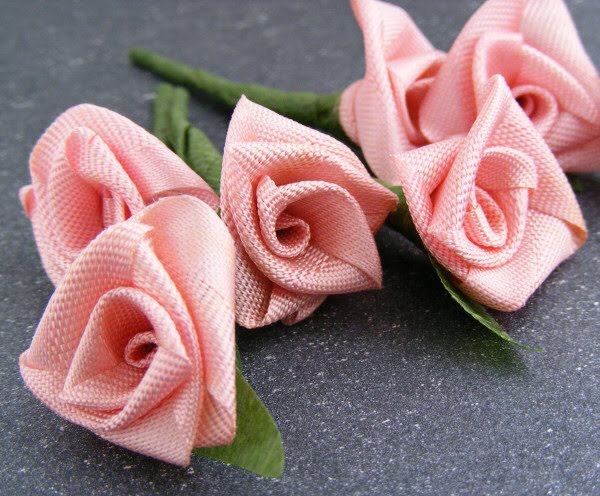
They waited around 50 years to bloom. They’re about 25mm (1″) in diameter, from 15mm (.6″) wide ribbon.

My other grandparents were manufacturers and importers of fancy goods – long before the public could fill their shopping basket with globally made or grown goods – when such an idea would seem so elusively exotic. They’d buy fancy goods made overseas and package them in Lancashire to sell to department stores. Much of the packaging was cellophane and bows – thankfully no sealed and moulded plastic contraptions available then.


I have a quantity of ribbons left from said venture and have gradually been using them when packing my jewellery. Lovely thick satins and fancy shaded organdie and even some pre-made bows. I have a biscuit tin which is full of what must be at least 100 yards of a basic woven pink ribbon that must have fallen off its spool at some time and was seemingly put aside for future untangling and has remained, shut away in a rather creased and scruffy knot, for what must be close to 50 years. There are several cut ends to it, where someone has used some of it, without wanting to unravel the whole mess. I also have a bag of short ribbon pieces from when I had a haberdashery shop from the ends of rolls, some of these, at least 12 years old, feature below too.

Vintage ribbons. I love that the ‘Approx. width’ is 15/16 inch – if it’s only approximate, why not just say 1″?

Even once untangled and pressed, the pink vintage ribbon isn’t really good enough to use as flat ribbon, there are grubby patches and snicks and it’s not in very good shape. I’ve kept it on my shelf, determined that some day it will find a use. I hate throwing things away anyway and it had sentimental value too.

As a teenage student (what seems a lifetime ago) I’d first travalled to America and bought some lovely satin ribbon roses in China Town in LA, having watched this tiny old lady making them on the street with the swiftest of tiny movements. I spotted them on my mirror a few days ago and wondered how easy it would be to make something like that myself to decorate my jewellery packages.

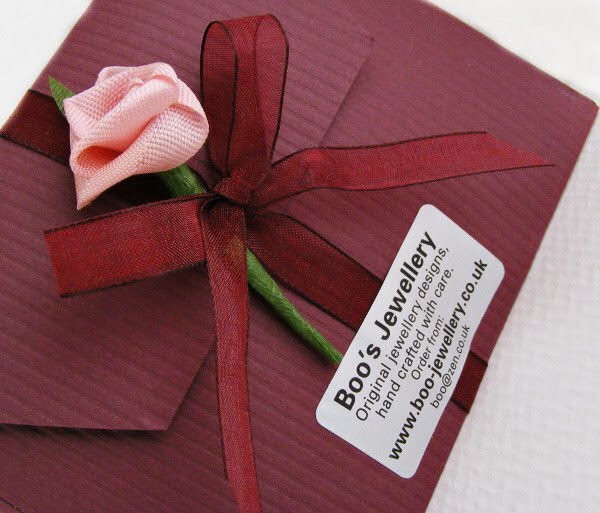
A vintage ribbon rose put to use on a finished jewellery piece wrapped and ready for packing. I make my own envelopes too and a tutorial to download for these can be found in an earlier blog.

A bit of ferreting on-line found various tutorials and I made several roses and rosebuds using different techniques. Some methods were clearly going to be too fiddly to be worth persisting with, but I found one that was quick enough to be worth mastering. The tutorial I found was in itself flawed and my results were variable – I needed to figure out why some were clearly better than others – some had a gorgeous little spiral of petals at the centre, some were a ragged knot. Some systematic trial and error figured out why, the early part of the tutorial was either missing a stage, or mis-drawn. Once I overcame this gap in the method, I found that I could reliably make a decent looking rose in a matter of seconds, which I then wired together to secure and finished with some green florist’s tape to give them a stem.

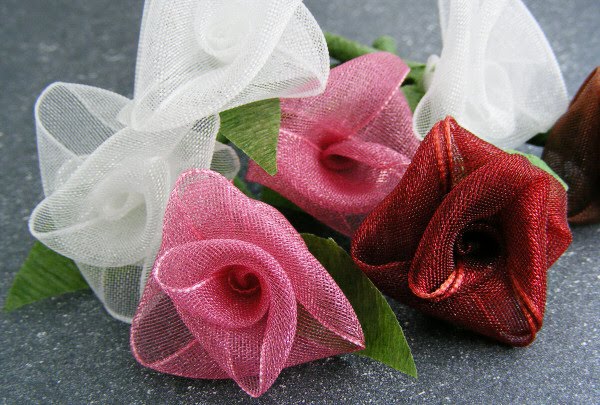
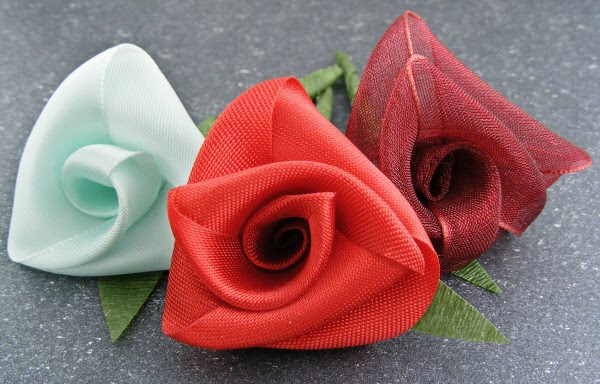
I tried some in oddments of organza and chiffon ribbons and they work just as well, if a little more freeform – the dark red one on the right is from a wide piece of ribbon folded in half lengthways.

Some larger roses in satin and organza ribbon.

I’m absolutely delighted that I can at last put that vintage ribbon to good use and that I can add something pretty to my packaging that is genuinely vintage and re-purposed. And I think my grandparents would be pretty tickled to see me make something new from materials that were perhaps thought beyond use by all of us. I hope they’d approve.

I’ll probably put together a new tutorial on my method, if this would be of interest, as an aide memoire for myself if nothing else. Let me know if you’d like to see it here on the blog.