4 May 2009

One of natures great engineers

We went out in the garden to do some work yesterday (see last blog) and as I stood on the doorstep I could hear a little noise – looking up there was a wasp working on her nest on the door frame. It’s a fabulous structure, but we couldn’t leave it there. I just managed to snatch a handful of photos before Mr Boo removed it. And yes, my door frame does desperately need painting.

This was my first view of the nest, pretty much in silhouette in the door frame.


It was a stunningly clever structure and I was loathe to break it off, but having seen how large (and how fast) one got in a friend’s garden last summer, decided we needed to be rid of it at this stage.

My reading would suggest that at this time of year, the larger than average wasp building the structure was probably a queen. It seems that all wasps except queens die off over winter and she survives having holed up somewhere safe in an old nest or new small one she makes just for the purpose. In late April/early May, the queen starts off making a small new nest in order to lay her eggs.

She was fertilised last year and lays her eggs in the new part-made nest and as they hatch, they continue with the structure in order to make a full size nest for the entire colony. The nests can grow up to 30cm (1′) in diameter or more and will likely be occupied all summer. Looks like we were right to destroy it before it took hold, she won’t have been alone for long.

She was very, very annoyed that we undid all her handiwork,
had it been in a better position, we might have left it to develop
and observe, but it really had to go from where it was.

She disappeared inside at one point and I was hoping to see what she
was
doing, but I was in a very precarious position with a heavy camera and
long lens in one hand and too close to focus, so ducking further
and
further back to try and focus, so it has a little movement blur.


Last summer I experienced the same little noise when out in the garden and it took me several days to identify it. That too was a wasp – on that occasion he was gathering his building materials rather than using them. He was working away on an old wooden garden chair, removing bits of timber in long thin strips, which he appeared to sheer off with his mouth parts and coil it up as he worked – when he’d got a decent sized piece, he’d fly off out of sight with it, only to return shortly and repeat the process. They apparently chew the wood up into a pulp with their saliva and this gives rise to a paper-type product for the structure of their nests.

Over a few days, he stripped the surface off a lot of my chair. If I went close to either observe or shoo him off, he’d just vanish round the back and continue working, thinking I didn’t know he was there, removing my garden furniture a few grams at a time. The little noise of timber being stripped being the only clue that he was still beavering away on the timber for his home.

In this frame, most of the timber surface has been removed, you can
see the exposed rough fibres and the odd remaining patches of varnished
surface where he’s ‘missed a bit’.
3 May 2009

It’s amazing what there is to see when you look closely

You can click any of the photos to see a larger version.

My very modest postage stamp of a garden has been a great joy to me since we developed it from scratch. It has filled out and developed over the years into a haven of peace – the place I reward myself with time when I reach some deadline or the end of an especially tricky piece of work. I potter and tinker as I eat my lunch and work outside on every day the weather makes it possible.

I laughingly call it my ‘courtyard garden’. In reality, it started life as a typical yard to a Lancashire cottage – a walled patch of concrete, originally to house the outside facilities – and in more recent times, the bins.

There is a tale attached to the layout of our house and outside areas, which are pretty much back to front. It would be normal practice for houses to face the street and have their back yards on the side of the house furthest from the street, but our house is one of a collection of cottages, all slightly different, that housed the workers of the adjacent mill. Mine, the largest and end of a short row, is reputed to be the mill manager’s cottage. My yard and back door are on the street side and my ‘front’ door on what is the gable end.

When they were built, the owner of ‘our’ mill was in some sort of feud with the owner of an adjacent mill, who owned a very large domestic property of some status (in recent times it has been a nursing home) along from the row of mill workers’ cottages. In order to cause him maximum offence, our mill owner built the properties back to front, to ensure that the outside facilities and less attractive aspect of the houses faced the road, so that as his rival drove past to his large luxurious home in his carriage, he had to pass the back of the workers’ homes, offending his sensibilities.

Our cottage is a long thin stone built property of about 140 years old now. So the yard is long and thin too. We have our proper garden on the other side of the house, but the layout doesn’t make it as suitable to occupy, so I leave that as my bird garden – one to be viewed from inside and enjoyed through windows and my courtyard garden is the one we spend time in. Being fully walled it gives us more privacy and is a sheltered sun trap that has allowed it to thrive.

Due to unfortunate domestic circumstances, I’m not going to be able to spend any money on summer planting this year, or at least only the barest minimum. So I decided today to make the best of what we already have.

I’ve always kept a lot of evergreen plants and perennial greenery to supplement annual flowers, which ensures that it looks good and has interest all year. Which will come into its own this season when I can’t do so much summer planting. So we moved things around to fill gaps and re-potted things and gave it a good tidy and I was pretty happy with the results.

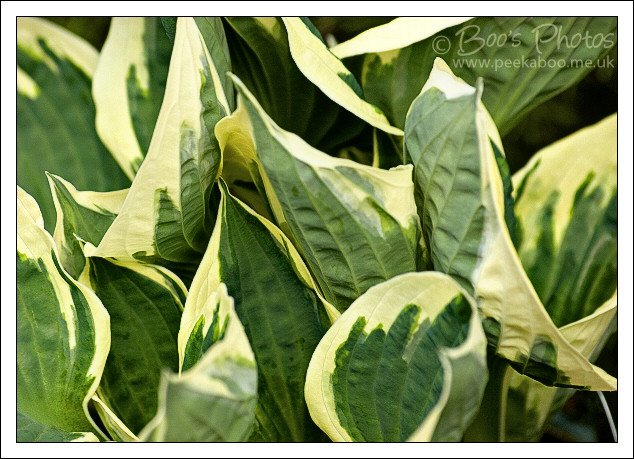
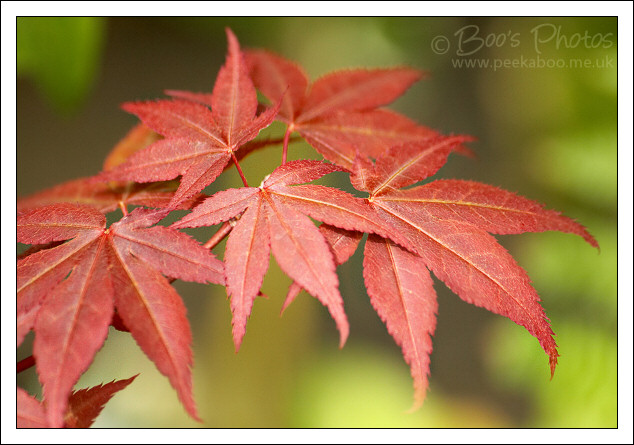
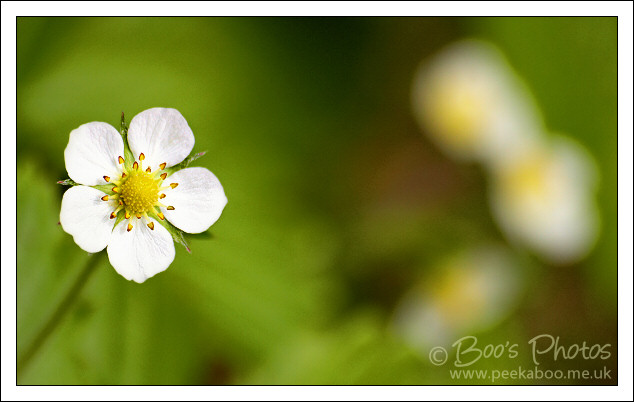
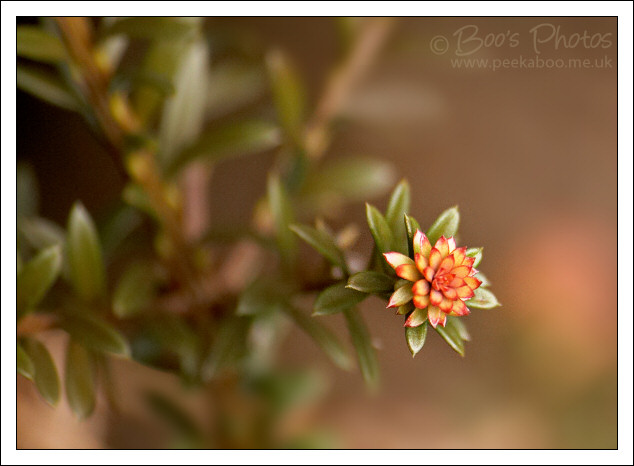
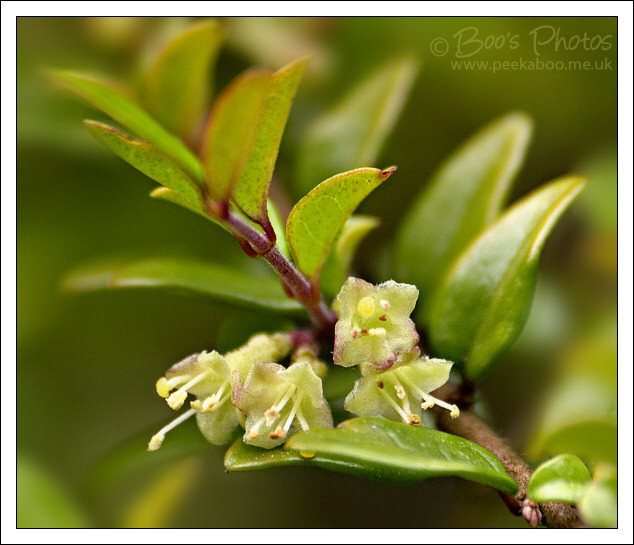
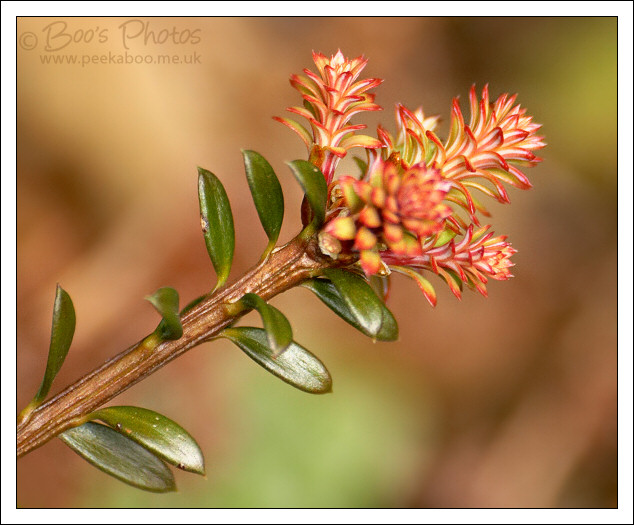
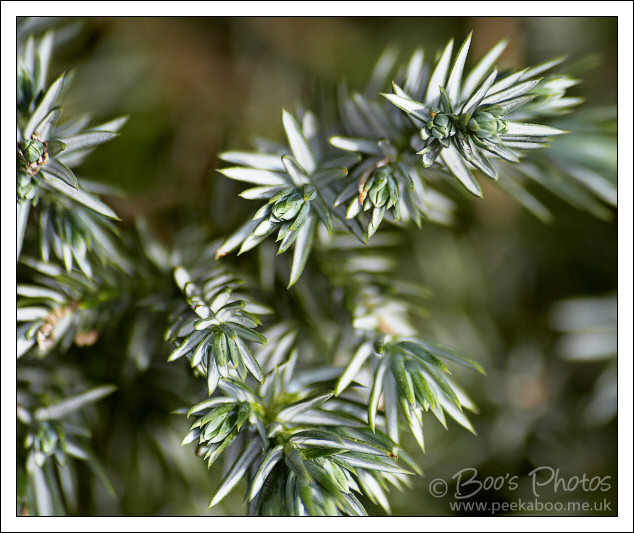
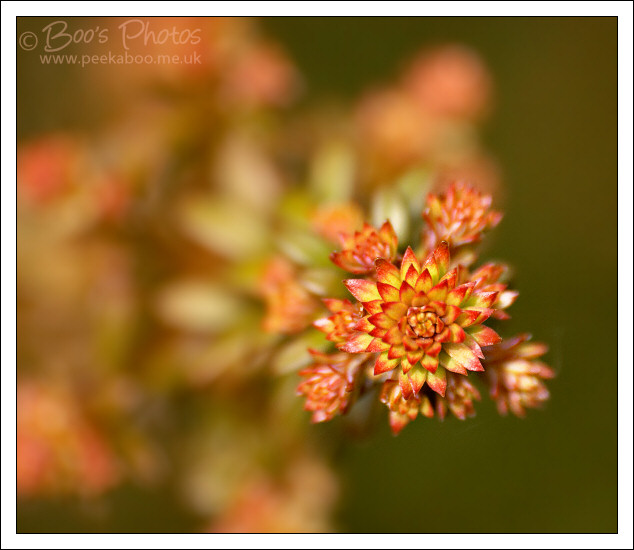
It’s at that exciting time when everything is waking up after winter and even supposedly ‘green’ shrubs develop little flowers and new growth races away. I took some photos – most of these below are of very small areas of growth, tiny little flowers at the end of shoots – some only a few millimeters in diameter. This is why I love taking photos of little things – you get to see detail that you just don’t see with the naked eye.

I was astonished to see that this little flower at the end of a growing shoot actually has striped petals on the back – why does nature bother to give it this detail?